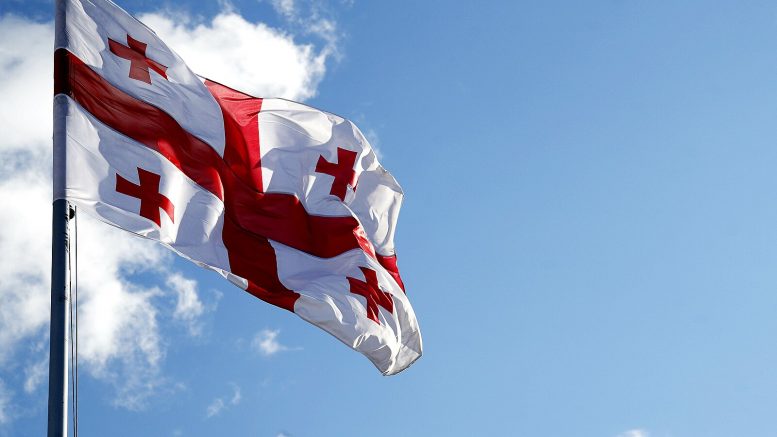
I last visited Georgia a bit more than a year ago. National elections were just days away, and despite aggressive campaigning by the ruling Georgian Dream party, everyone I spoke to was convinced that the opposition parties would win a majority. The disputed election results — never certified by foreign observers — triggered some large protests, and members of the opposition parties refused to take their seats in parliament. But those protests began to fizzle out and would have ended but for an extraordinary decision by the country’s leaders.
Georgia, they announced, was suspending its process of accession to the European Union. This was extraordinary because the one thing everyone in Georgia seemed to agree on was that the country was on a European path. EU flags flew over the national parliament. Georgians were beginning to benefit from such things as visa-free travel to Europe. There was hardly any anti-European sentiment to be heard.
But there already cause for concern long before Georgian Dream took that fateful decision. The billionaire behind the party, Bidzina Ivanishvili, and his allies had long spoken of Georgia’s need to resist an imaginary “global war party” — and stoked fears of another war with Russia. They also allied with the most reactionary elements in the Orthodox Church to promote homophobic violence, eventually making it impossible for the local LGBQTI community to hold Pride events. Georgia had already embarked on an illiberal path long ago, meaning that the decision to turn away from Europe and the West could have been foreseen.
The result of that government decision was to energize the opposition and trigger nightly protests in front of the parliament building every single day through the last year. As Georgia began to drift away from Europe — and draw closer to Putin’s Russia — the protests grew. The main street in the capital Tbilisi was basically shut down every evening. The government’s reaction was repression.
Protesters were jailed and beaten, and as the BBC revealed in an investigation this week, Georgian riot police deployed a chemical weapon dating back to the First World War in its water cannon, disabling demonstrators and causing long term health problems.
Leaders of opposition parties were arrested. The government announced that it would be banning some of those parties.
Journalists representing independent media were beaten and jailed. One of them, Mzia Amaglobeli, a prominent opponent of the increasingly undemocratic regime, was accused of slapping a police officer and sentenced to two years’ imprisonment. In response the European Parliament awarded her the annual Sakharov Prize.
A year ago, there were no political prisoners in Georgia. Today, there are scores of them, many quite young. I recently attended an event, part of the London Georgian Film Festival, showcasing very short films about some of the prisoners. It felt as if an entirely new political movement was emerging, as young activists with very limited political experience were learning how to fight, trained in the regime’s jails.
What is happening today in Georgia is a product of a long and complicated history. Everyone in the country remembers the bloody fighting of the 1990s and no one wants a return to civil war. But everyone also remembers the many decades of Soviet rule, decades of repression and lies, and no one wants a return to that either. An increasing number of younger Georgians seem to be inspired by the independent republic of 1918-21, led by social democrats. The flag of that republic has been held aloft by the some of the protestors in Tbilisi’s streets.
Just a few years ago, Georgia was seen as a beacon of democracy in the post-Soviet world. That is sadly no longer the case. Whether the Georgian people succeed in rekindling that democratic spirit and put the country back on a European path depends in part on what the rest of the world does. The American response under Trump has not been particularly helpful. But it also depends on the Georgians themselves. In the last few decades, they have seen off the Soviets, the authoritarian Shevardnadze regime, even the neoliberal Saakashvili.
Though they have managed to carry out non-violent revolutions in the past — most notably the Rose Revolution that brought Saakashvili to power — there is no guarantee that they can do so again. Countries with similar authoritarian governments have managed to thwart popular protests and resist change, including in Hungary, Turkey and Russia. But with their history as an inspiration, young Georgians may once again surprise the world.
This article appears in this week’s issue of Solidarity.