Archive for the ‘Uncategorized’ Category

Unions and campaigners – time for an honest conversation?

Monday, April 15th, 2013

A tip for union web designers

Tuesday, December 18th, 2012

This is so geeky, if you’re not caught up with the jargon please don’t read any further.

I’ve been busy creating a database for a new website. The database has a several tables, and in them, a number of fields including things like name, country, union, etc.

No matter what I did, the database was not updating.

Then when I changed the name of the field ‘union’ to ‘tradeunion’ it all worked.

And the reason? The word ‘union’ is a reserved word in My SQL 5.0

I am not making this up. Any web designer building an online database for a union may find themselves stuck, as I was, for days – until realizing this was the case.

Max Shachtman and his legacy

Tuesday, November 13th, 2012

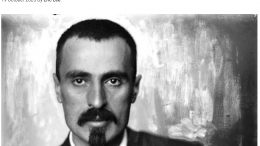
Max Shachtman.In 1975, at a conference in Boston, I met a local socialist activist and when I asked him where he fit in politically, he replied that he was a “1946 Shachtmanite”.

I learned that a lot of leftists could describe themselves in that way. One could be a “1939 Shachtmanite” (meaning an orthodox Trotskyist) or even a “1925 Shachtmanite” (still loyal to the Communist Party).

I guess I could be described as a “1971 Shachtmanite”, that having been the year I first heard of Max Shachtman — and first heard him speak.

The conventional wisdom on the far Left is that Shachtman at some point ceased being a leftist. If you are a Stalinist, you can date that back to Shachtman’s adherence to the international Left opposition in the 1920s. Orthodox Trotskyists tend to date Shachtman’s breaking ranks to 1939-40, when he famously disagreed with Trotsky on the class nature of the Soviet Union. Some of Shachtman’s own followers decided that in the late 1950s, Shachtman ceased being a Marxist when his led his organisation, then called the Independent Socialist League, into Norman Thomas’ moribund Socialist Party.

But being too young to have experienced any of Shachtman’s various “betrayals” I first encountered him in 1971 as the revered, if still controversial leader, of a faction which had taken over the Socialist Party only a couple of years earlier and which was implementing his strategy of “realignment” — trying to turn the Democratic Party into a labour-led Social Democratic Party.

At the time, Shachtman was embroiled in his final faction fight. His protege, Michael Harrington, was in the process of leading a breakaway faction known as the “Coalition Caucus”, and the split would be over a number of issues, of which the Vietnam war was just one.

I first encountered Shachtman on the flight from New York to San Francisco in December 1971. We were going over to attend the convention of the SP’s youth section, the Young People’s Socialist League (YPSL). Shachtman was holding court on the plane, addressing both his own followers and Harrington’s supporters as well. As we approached California, I remember flight attendants pleading with him to sit down, as he continued one of his speeches.

At the time I thought — don’t they understand that this is Max Shachtman, a man who knew Lenin and Trotsky, founding editor of the Daily Worker, leader of the Young Communist League, the man who represented Trotsky at the founding congress of the Fourth International, the World Party of Socialist Revolution? Probably not. Eventually Max took his seat.

At the convention itself, Harrington — who was still the national chairman of the Socialist Party — was scheduled to address us one night, and then head back to the east coast. Shachtman would speak the following night.

I’d never heard Harrington speak, and was stunned by his eloquence and intellect. I think everyone in the room felt that we were hearing perhaps the best orator the American Left had ever produced, and one of its most profound thinkers. Harrington was proposing that a “new class” had arisen in America, a class of university educated middle class people who took positions based on moral judgments, opposed the Vietnam War, supported civil rights and equality for women, and so on. The old rigid socialist ideas about the working class and the conservative, pro-war trade unions had to be re-thought.

Shachtman addressed us the following night. By then I was practically a signed up member of Harrington’s Coalition Caucus, certain that the man had to be right, had spoken so well.

Shachtman was supposed to speak, I think, on the growing rift between the Soviet Union and China. But instead, he chose to deliver a stinging riposte to the absent Harrington. He began by paying tribute to Harrington’s eloquence, comparing his speech to the sounds of a great symphony orchestra. Here the string section, there the bassoons. Shachtman’s followers were already giggling and he was only warming up.

His speech lasted at least a couple of hours and was an extraordinary mash-up of Yiddish-influenced New York Borscht Belt standup and hard-core revolutionary socialist theory.

It was laugh-out-loud funny, but it was also full of ideas, many of them explained as stories.

For example, to drive home the centrality of the trade union movement in any kind of “coalition politics”, Shachtman told a story — at some length — about how the Communist Party had once persuaded the Chicago Federation of Labor to support the formation of an independent labor party. When the founding conference was held, the union federation was given one delegate with one vote, and a whole slew of Communist front organizations were also each given one delegate with one vote each. The Communists rammed through their entire programme over the objections of the union, and as the Party explained it later the conference was a great success — because only one delegate had walked out!

By the end of the evening, I was hooked. Shachtman was not only a brilliant orator with a razor-sharp wit, but also represented a century of continuous revolutionary history. He had indeed visited Moscow in the time of Lenin, had stood as Trotsky’s bodyguard during his exile, had helped run the historic Minneapolis teamsters strike, and there he was speaking to us, an audience of young socialists at the beginning of the 1970s. He embodied everything that was extraordinary about being a revolutionary socialist, and like many others I fell under his spell.

Within a year, Shachtman had died, and the question of his legacy became a point of contention between various leftist factions.

As I’ve said, the most widely-held opinion is that Shachtman at some point sold out, betrayed the cause, abandoned the Left for something else. In the forty years since his death, the argument has been muddied a bit by the fate of his followers, some of whom became neo-conservatives, served in the Bush administration, even became opponents of the trade unions.

One of Shachtman’s followers at the time, Max Green, who was the YPSL national secretary and who recruited me to the organization, by the early 1990s was publishing books denouncing trade union involvement in politics. Josh Muravchik, the YPSL national chairman at that time, publicly renounced socialism in a recent book after drifting right-wards for many years. The YPSL vice-chairman, Carl Gershman, was appointed by Ronald Reagan to head up the National Endowment for Democracy, a post he still holds thirty years later.

But Shachtman cannot be judged based on what some of his followers chose to do later in life. We must judge him based on the ideas he espoused in his time, understanding that it was a different time from ours.

In the debate with Michael Harrington over the question of the centrality of the trade union movement to the struggle for a better society, I think Shachtman was right and Harrington was wrong. There was no “new class” which made its political decisions based on moral judgements, as Harrington argued back then. In later years, I grew close to Harrington and even considered him a friend, and I think that in many ways he carried on Shachtman’s tradition in the organization he founded — whereas Shachtman’s own followers drifted away.

On the question of the Vietnam War, nearly everyone now says that Shachtman and his followers were wrong; that American imperialism was brutally trying to put down a popular, national uprising and socialists should always be on the side of the small, oppressed nation. But as Guardian science writer Ben Goldacre is fond of saying, “it may be a little more complicated than that.”

Shachtman belonged to that generation of Trotskyists who witnessed the slaughter of their Vietnamese comrades at the hand of Ho Chi Minh and his Stalinists. They didn’t have a warm spot in their heart for “Uncle Ho” any more than they did for “Uncle Joe” Stalin.

And while they may have opposed the methods used by the American ruling class to wage war — such as the savage carpet bombing of Vietnam — they didn’t want to see those Ho’s Stalinists in power in South Vietnam either.

Socialists at the time were making difficult choices, just as they did during the Korean War, and the Second World War before that. The choices they made were not always right. Many revolutionary socialists couldn’t bring themselves to support British imperialism in the fight against Hitler, for example. But no one should doubt the sincerity of those beliefs.

By the time Shachtman died just before the November 1972 presidential election, his vision of the transformation of the Democratic Party into a Social Democratic Party was in tatters. The liberal wing of the party had taken control, but it was anti-war middle class liberals running the show, with the unions nowhere to be found. The AFL-CIO couldn’t bring itself to endorse the Democratic candidate, George McGovern, for the same reasons that Shachtman wouldn’t either.

But four decades on, Shachtman’s legacy lives on in many ways, not least of which having taught a generation of Leftists that there is no socialism without democracy, and that regimes which suppress liberty (such as Ho’s Vietnam or Castro’s Cuba) are undeserving of sympathy or solidarity.

He put the trade union movement at the center of a progressive strategy at a time when unions were still seen by many leftists as simply bastions of pro-war, racist conservatism (which to a certain degree was true — but that wasn’t the whole truth).

And for me, as a very young leftist at the time, he was a living link to a great and inspiring tradition stretching back to Trotsky, Lenin, Engels and Marx.

LabourStart goes from strength to strength

Friday, November 9th, 2012

This is nice – on a website of the Australian Council of Trade Unions.

What does global solidarity look like? Notes for a panel discussion

Tuesday, March 29th, 2011
The following are my notes for a panel discussion on global solidarity at the UALE conference in New Orleans, 24 March 2011.
LabourStart’s extensive experience
We have been at this since 1998
At first, we just linked to union campaigns
By 2002, we had in place our own system – very similar to what Avaaz
and others now use
Since then we’ve run probably close to 100 campaigns at the request of unions
These campaigns are multilingual, integrate into our news, are
syndicated, and are promoted primarily through our mailing list of
70,000 — which is, in turn, built through the campaigns
We’ve had a number of successes – I will talk about only one of them at the end
What we have learned … (more…)

Israel, the Middle East and the International Trade Union Movement – notes for a lecture

Wednesday, March 23rd, 2011
The following are my notes for a talk given at the headquarters of the American Federation of Teachers in Washington, DC on 23 March 2011.
What I will talk about today:
The bad news
The good news
Where do we go from here
The bad news (more…)

Activism vs Slacktivism: notes for a debate

Monday, March 21st, 2011
The following are my notes for the debate on Activism vs Slacktivism held in Oxford on 21 March 2011.
I want to talk about three things.
First, about the question itself, about whether we should be using online tools and their role in social change.
Second, about the part of this debate that has nothing to do with technology – about the role of organizations vs loose networks and spontaneity.
And third, about the case of Joanne Delaney. (more…)

Results of the first annual global survey of trade union use of the net

Sunday, January 30th, 2011

Published today – well worth reading.  (Click here.)

Amnesty International UK Section: Board election results announced

Tuesday, April 20th, 2010

Amnesty International’s UK Section has just announced the results of the elections to its Board.  I was not elected.

Of the nearly 250,000 Amnesty supporters who were eligible to vote, only 8,055 bothered to do.

In the voting for first place preferences, I polled 600 votes — placing me fifth out of the ten candidates.
However, I polled very few second and third place votes, and was the fourth candidate eliminated, having achieved a total of 710 votes.  To have avoided elimination at that stage, I’d have needed about 23 more votes.

I’d like to thank the hundreds of Amnesty supporters who voted for me, and to congratulate the four winners: Peter James Murray, Sarah O’Grady, Collette Anne Crill, and Sharmila Kar.

Amnesty: “It would not be helpful” to debate Gita Saghal’s case at the AGM

Sunday, April 4th, 2010

The following is the response I received from Amnesty International’s UK section following the submission of my emergency resolution to the annual general meeting.

Dear Eric

Thank you for submitting your resolution on Gita Saghal.

Unfortunately we are not able to accept this resolution.

There is currently an investigation under way at the International
Secretariat in relation to Gita Saghal which is being carried out in
accordance with the IS’s established human resource policies and UK
employment law.  The investigation is clearly carried out
confidentially in line with established human resource practices and
accordingly we do not believe it would be helpful, or carry any weight
in the outcome of this investigation, for the AGM to debate the specific issue of Ms Saghal’s employment

If you disagree, you may have 3 minutes time on Saturday morning in plenary to ask conference to overturn our decision.  If you get a two-thirds majority, the resolution will be debated.

I’m sorry to disappoint you.

Ruth Breddal
Standing Orders Committee