" /> Eric Lee: January 2008 Archives

« December 2007 | Main | February 2008 »

January 31, 2008

Obama's slum-lord friend

The arrest this week by FBI agents of Chicago real estate developer Antoin "Tony" Rezko made headlines for only one reason. Rezko is Barack Obama's slum landlord best mate, according to Hillary Clinton. According to Obama, Rezko is "a friend of mine, a supporter, who I've known for 20 years."

FBI agents arresting someone in Chicago will conjure up images in some minds of organized crime, but the charges against the businessman are actually far less glamorous. Rezko is not accused of drug dealing or murder. He is accused of conspiracy, influence peddling and demanding kickbacks from companies seeking Illinois state business. His bond was revoked because the court considered him a flight risk following prosecution claims that he was hiding millions of dollars in assets.

On Monday this week, prosecutors also revealed that in 2005 Rezko tried to buy entry into the United States for an Iraqi billionaire, Nadhmi Auchi. Auchi paid Rezko $3.5 million for the favour. Rezko attempted to conceal this money which is what led to his arrest.

Like others in his business, Rezko cultivated politicians who he felt could be useful to him. He bought and sold political influence. And one of the people he tried to buy was Barack Obama -- who admits to having lobbied on Rezko's behalf while in the Illinois State Senate.

Obama has not denied taking Rezko money. And aware of the fact that it might seem like tainted money to some, he's announced that he's giving it away. Obama already returned over $150,000 of Rezko money to charity, but some think that there's actually much more money involved. Obama denies this, and says "we've traced any funds that we know of that we think were connected to him. And if there any other funds that were connected to him that we're not aware of, then we will certainly return them."

It's not just the many campaign contributions Rezko made over the years to Obama. It's the questionable deals Obama made with Rezko, such as purchasing a home (next door to Rezko's wife) for $300,000 below the market price.

Obama also admits to doing several hours of work on behalf of Rezko.

Except for the "slum lord" reference in the South Carolina debate, the Clinton's have made little use of the Rezko scandal as they are hardly eager to remind voters of the many scandals -- financial and otherwise -- during the Clinton White House years.

Alone among the three Democratic candidates, former Senator John Edwards has refused to take money from lobbyists and corporations, and is relying on small donations from supporters and federal matching funds to run his campaign.

January 30, 2008

A deadlocked convention?

With the non-primary in Florida behind them, Democratic Presidential candidates have less than a week to prepare for what some are calling Tsunami Tuesday, when 22 states will hold primaries. A few weeks ago, the conventional wisdom was that the selection process for the Democrats would essentially end on this day with Hillary Clinton's coronation.

Barack Obama's stunning victories in Iowa and South Carolina have now changed all that. Instead of clear sailing for the Clintons back to the White House, it now increasingly looks like there will be a deadlocked convention. And this is something that very few people alive today have ever experienced.

A deadlocked convention happens when no candidate arrives with a majority of votes. A second ballot takes place -- and delegates are free to vote for whomever they want. This could include the other candidates, or even people who are not candidates. Delegates keep on voting until someone wins a majority.

The most famous deadlocked convention took place in 1924. The Democratic front runners were William G. McAdoo of California and Gov. Alfred E. Smith of New York. Smith would later on become the party's first Roman Catholic candidate for the presidency four years later, but in 1924, he came to the New York City convention with only 22% of the delegates. McAdoo was the front runner with over 39%. In subsequent balloting, McAdoo's strength rose, as did Smith's, but neither one was able to reach a majority.

After one hundred rounds of voting, McAdoo's vote had collapsed and Smith was up to nearly a third of the delegates. But delegates were tired of the war of attrition between the two rivals, and support emerged for a "dark horse" -- the former Ambassador to Britain, John W. Davis. On the 103rd ballot, Davis won. He went on to be defeated by Republican Calvin Coolidge in the general election. Curiously, Coolidge never left his home to campaign, but won by a landslide.

Could history repeat itself? Unless one of the three current Democratic candidates withdraws from the race, this seems increasingly likely. Pressure is being brought by some on John Edwards to pull out, and rumours this week had Obama offering him a position in the cabinet as Attorney General. But Edwards himself keeps saying that he's staying in the race until Denver. Maybe like John W. Davis, Edwards could turn out to be the compromise candidate that Clinton and Obama supporters agree upon.

January 29, 2008

Clinton in Florida

Florida is the fourth largest state in the US, with 27 electoral votes and 210 delegates to the Democratic national convention. It's where George Bush (or Al Gore) won the 2000 elections. And depending on your point of view, it either is or is not holding a Democratic primary today.

Last spring, the Florida legislature voted to hold the primary on 29 January 2008 (it's usually held in March). But the Democratic National Committee told it to change the date to 5 February or later because only four states would have the right to hold early primaries and caucuses (Iowa, New Hampshire, Nevada and South Carolina). Florida refused to budge, so the Democrats have said that it will have no delegates to the national convention in August -- and no say in who becomes the party's candidate. (Michigan is in the same situation as Florida.)

All the candidates agreed to support the party leadership on this one. On September 1, 2007, Clinton, Edwards and Obama signed a pledge to not campaign in Florida. So it's a non-primary, getting no coverage, as we all await Super Tuesday next week.

Except that the latest opinion polls show Hillary Clinton with a commanding lead in the Sunshine State. One poll taken last week showed her winning over 50%, with Obama 25 points behind and Edwards trailing a distant third. Following the debacle of South Carolina, Clinton desperately needs a show of strength somewhere.

On Friday, she stunned the political world by declaring that she would ask her "delegates to support seating the delegations from Florida and Michigan." And in an internal campaign memo sent out the following day, her communications director wrote "Despite efforts by the Obama campaign to ignore Floridians, their voices will be heard loud and clear across the country, as the last state to vote before Super Tuesday on February 5th."

On Sunday Clinton campaigned in Florida, in violation of her pledge. Her presence in the state was widely covered by local media. She made sure to be photographed in front of palm trees in Sarasota. She insists she wasn't campaigning, just attending a closed meeting. On Tuesday she will once again be in the state to welcome her expected primary victory.

A spokesman for Obama reacted furiously: "If the Clinton campaign's southern strength rests on the outcome in a state where they're the only ones competing, that should give Democrats deep pause."

Clinton's rule-breaking forays into Florida follow closely upon the controversial attacks on Obama made by her husband, and seem to confirm what many critics have long said about the Clintons -- they will do anything to win.

January 28, 2008

South Carolina: Clinton's victory?

Dick Morris knows something about the way Bill and Hillary Clinton think. In 1996, he managed Clinton's successful campaign for re-election. After having fallen from grace, he's turned against the Clintons and is no longer close to them. Still, people pay attention to things he says. And three days before the South Carolina primary, Morris said something that made people sit up and pay attention.

In an article entitled "How Clinton will win the nomination by losing South Carolina" Morris laid out a strategy which he is convinced the Clintons have adopted. It is such an insanely Machiavellian approach that one is tempted to say that it's the product of a sick mind. And yet it appears to be precisely the strategy that the Clintons adopted in the Palmetto state.

It goes like this. Obama unites people across races and classes. He won Iowa, a virtually all-white state. As Morris wrote, "Obama has done everything he possibly could to keep race out of this election."

Obama was criticized by Jesse Jackson four months ago for failing to speak out on the issue of the Jena 6, Black students accused of murder following an explosion of racial tensions at their Louisiana school. Jackson said Obama was "acting like he's white." (John Edwards called for his supporters to travel to Jena to protest and has been outspoken on the continuing racial divide.)

But the Clintons are making sure that race is very much part of this election, as we saw last week. Morris thinks this is deliberate, and writes "if Blacks deliver South Carolina to Obama, everybody will know that they are bloc-voting. That will trigger a massive white backlash against Obama and will drive white voters to Hillary Clinton."

Dick Morris may be crazy. But he may be onto something here. It all depends on what you think about race in America.

If you believe that Martin Luther King's vision has come true, and that Americans now "live in a nation where they will not be judged by the color of their skin but by the content of their character" -- well then, Obama will win Black and white votes and go on to capture the Democratic nomination and the presidency.

But if you think that racism is still very much alive in America, you can begin to imagine politicians taking that into account, and turning it to their advantage. If Dick Morris is right, intentionally or not, Obama's massive victory in South Carolina might mark the beginning of his downfall.

January 27, 2008

Winners don't quit

.

Edwards still standing

"He doesn't know it's a damn show! He thinks it's a damn fight!" - Apollo Creed's trainer, "Rocky" (1976)

For once the pundits and the pollsters seem to have gotten it right. South Carolina was a big win for Obama; Clinton did take second place; and Edwards got nearly precisely the numbers predicted for him in the last Zogby/CNN poll. They can now calmly return to doing what they were doing before, confident that what they say is true and that everyone is doing what they have been scripted to do.

Except that John Edwards is not doing what he is supposed to do. He doesn't know it's a damn show. He thinks it's a damn fight.

Edwards is staying in the race, as he has always said.

His advisors are saying things like "look at the polls in Oklahoma" where Edwards is running a strong second, where Obama has little support. And people like myself have been saying for some time that one of the two celebrity candidates, the ones getting all the media attention, is likely to pull out of the race at some point, possibly as soon as the morning after Super Tuesday. If Edwards is still standing, it will be him against just one of them.

More practical types are saying that Edwards is staying in the race so that he can show up at the Democratic National Convention in Denver with truckloads of delegates, and play the role of king-maker (or perhaps emerge as a dark horse favorite after a few rounds of deadlocked balloting).

But I think he's staying in the race because he actually believes the things he's saying. He really does want to guarantee health care for all, end poverty in America, and strengthen trade unions.

In the next few days, the squabbling between Clinton and Obama is likely to become uglier and meaner than before. If you thought Bill Clinton was a vicious attack dog before South Carolina, wait till you see him now. The mainstream media called this race a long time ago, and are baffled at Edwards for still being in the ring this late into the fight. (Meaning, those that even notice he's there.)

John Edwards has survived four rounds in the ring with the political equivalents of Apollo Creed. His nose may be broken, his eye may be cut, but he is still standing. Call him stubborn or call him persistent, but I grow more impressed with him every day.

Senator Edwards -- as long as you are in this fight, I am behind you.

January 26, 2008

Edwards surges in South Carolina

Voters in today's South Carolina Democratic primary are not following the script. They're not playing their part. And it's confusing pundits and pollsters to no end.

In American politics, endorsements by celebrities, politicians and organisations (including unions) are supposed to be vital for a campaign. And dollars buy votes, so the candidates who spend the most money win the elections. And of course the mainstream media controls everything, so if they write off a candidate as being "not serious", that candidate will be effectively out of the race.

But as South Carolina is now showing, none of that is actually true. Since early in the week, public opinion polls have been showing a steady decline in strength for both Barack Obama and Hillary Clinton. The petty squabbling between the two has turned off many voters, and there is now a fairly large block of voters who are undecided.

But the real change -- noted by all the major surveys -- is the rise of John Edwards.

Edwards, whose political obituary was written weeks ago by the mainstream media and who has been outspent many times over by Clinton and Obama, has been soaring in the South Carolina polls, and according to the Zogby/CNN polling on Thursday, actually surpassed Clinton for second place and is within striking distance of defeating Obama for first. In only a few days, Edwards has moved from a distant third to a possible winner.

This is so totally unexpected, that the mainstream media will have difficulty coping with it should it happen. And even if Edwards does poorly in his home state, the question of why there was an Edwards surge in the polls may trouble pundits for some time to come.

There are lots of possible reasons for this. Obama and Clinton have done a fine job of painting each other as thoroughly rotten, dishonest and corrupt politicians. And Edwards has shown the kind of commitment in South Carolina that he did in Iowa, campaigning on the back roads and small towns of the state where he grew up.

But there's another reason as well to explain the change in the polls. In the end, class trumps gender and ethnicity. Everyone is feeling the effects of Bush's failed economic policies, and Americans worry about a recession, about losing their jobs and homes. When women workers and Black workers start voting in their economic interests rather than because they'd like to see "one of their own" in the White House, you'll get the kind of results pollsters are now predicting in the Palmetto state.

January 25, 2008

Democrats divide over Reagan legacy

Much of the debate between the presidential candidates will reflect uniquely American issues. But sometimes the arguments will be instantly recognizable to people in Britain. This was certainly the case with Senator Obama's recent comments regarding Ronald Reagan and the Republicans.

In an interview for a Nevada newspaper on the eve of last week's party caucus, Obama was quoted as saying that "the Republicans were the party of ideas for a pretty long chunk of time there over the last 10, 15 years." He went on to say that "I think Ronald Reagan changed the trajectory of America in a way that Richard Nixon did not and in a way that Bill Clinton did not. He put us on a fundamentally different path because the country was ready for it. I think they felt like with all the excesses of the 1960s and 1970s ... government had grown and grown." Reagan, he said, "just tapped into what people were already feeling."

Substitute "Thatcher" for "Reagan" and put the words into the mouth of a New Labour politician and you've got Blairism at its very worst.

This is almost certainly what Obama actually feels, but it was a huge mistake for him to say it out loud. His quotes have been seized upon by his rivals. Obama has already been called the most right-wing of the three Democratic contenders by New York Times columnist (and noted economist) Paul Krugman. The Reagan comments seem to confirm what many progressive Democrats already felt.

But Clinton's attacks on Obama's Reagan remarks are a bit disingenuous. Bill Clinton came into office with the backing of the party's conservative Democratic Leadership Council. Like Blair, he saw positive features in the legacy of the Reagan-Thatcher era. Gone were the days of a federally-sponsored "war on poverty". Big government, according to Clinton, Reagan, and Obama, is a bad thing.

Of the three candidates, Edwards is the one who comes closest to the more traditional Democratic policies, the ones forged during the New Deal and carried out under presidents Roosevelt, Truman, Kennedy and Johnson. "I would never use Ronald Reagan as an example of change," Edwards said. “You think about what Ronald Reagan did, to America, the American people, to the middle class, to working people. He was openly, openly intolerant of unions and the right to organize."

Edwards promised voters that if elected, he "will never use Ronald Reagan as an example."


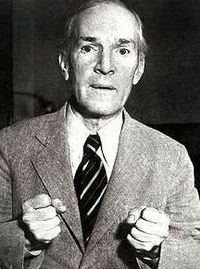
From EPIC to Edwards: Upton Sinclair's Legacy and the 2008 Election

For an entire generation of Americans, Upton Sinclair will be known -- if he is known at all -- as the guy who wrote the book that was the basis for the movie "There Will Be Blood".

To an earlier generation, he was known as the author of muckraking books such as "The Jungle".

Political historians will known Sinclair as one of the most famous members of the American Socialist Party who made history in 1934 when, running as a Democrat he very nearly won election as governor of California.

In the midst of the Great Depression, Sinclair launched his "End Poverty in California" campaign which won nearly 900,000 votes and was stopped only by a hysterical right-wing campaign which claimed his victory would lead to "Communism".

A key lesson from Sinclair's experience was that by running as a Socialist he'd earned only a fraction of the votes he got running as a Democrat. It was a lesson that it took the American Socialist Party a full generation to learn. Under the leadership of Michael Harrington, the Socialist Party finally took the decision to work inside the Democratic Party in 1968.

Why the history lesson?

Because I get the feeling sometimes that the John Edwards campaign is our generation's version of the historic 1934 EPIC movement.

There have been politicians, even candidates for President, who have campaigned on anti-corporate platforms. The 2000 Nader campaign was a recent example of this. By staying outside the Democratic Party, Nader guaranteed that he'd be seen by many as a spoiler. And of course he didn't have the remotest chance of winning the White House.

Eight years later, Edwards is running on a campaign not radically different from that of Nader or Sinclair. He's made ending poverty a personal crusade. He's taken on corporate power and corporate dominance of Washington in a way that only outsiders have done in the past.

And he's done it while maintaining a strong candidacy in the mainstream of Democratic politics, with an excellent performance in one state and perhaps better ones to follow.

Upton Sinclair didn't succeed with his EPIC campaign, and John Edwards may not succeed either. But they have pushed the agenda to the left, and raised the issues other candidates would not.

January 24, 2008

Race and class in South Carolina

The South Carolina Democratic primary, due to be held on Saturday, is the first in which race matters. The first states to vote in the year-long battle to choose the party's presidential candidate were the overwhelmingly white (and rural) Iowa and New Hampshire. But nearly 30% of South Carolina's voters are African-American.

It's going to be a difficult choice for Black voters. Barack Obama is of course seen as the first serious Black candidate for the presidency. Hillary Clinton, like her husband, is well liked and respected among African Americans -- and President Clinton was famously called the nation's "first Black president" as a tribute to that closeness.

Race has therefore, not surprisingly, come up repeatedly in recent days. Some in the Obama campaign have alleged that Clinton supporters have used coded racist language against their candidate -- such as repeatedly mentioning Obama's admitted use of cocaine. But the tensions came to the surface when Clinton seemed to make the argument that President Lyndon Johnson was more important to the cause of civil rights than Martin Luther King. This infuriated African Americans, and not only them.

The senior Black Democratic politician in the state, Representative James Clyburn, has stayed above the fray, refusing to endorse any of the candidates. He did, however, criticize Clinton for her remarks, calling them an affront to "those activists who put those issues on the table."

The comment was more likely an indication of Clinton's insularity, and her Washington-centered view of politics.

The mainstream media whipped up a firestorm around Clinton's comments and what are seen as growing tensions between the two leading candidates. But they have also missed a key part of the story, which brings us to John Edwards.

In 2004 Edwards, who was born in South Carolina, won the state's primary with 45% of the vote. As recently as a few months ago, polls showed him in the lead in this state, but the rise of the two celebrity candidates who have spent tens of millions of dollars between them has put his campaign into the shade.

Edwards has chosen to focus on class rather than race, though he more than any other candidate has highlighted the continuing inequality and injustice which African Americans suffer. And because of his focus on these issues, and in particular his commitment to ending poverty, he this week received a strong letter of support from Martin Luther King's eldest son. King publicly urged Edwards to continue in the race despite a poor performance in the Nevada caucus last week.

Whoever wins on Saturday, the South Carolina primary has focussed attention once again on issues of race and class -- issues which will not go away anytime soon.

Edwards rises from the ashes - pulls ahead of Clinton in South Carolina poll

The latest Zogby poll taken over 3 days in South Carolina puts Edwards nearly tied with Clinton for second place, but on each day of polling Edwards has gone up dramatically day by day in the wake of his performance in the CNN televised debate.

On the final day of polling, Edwards reached 27% -- leaving Clinton far behind.

In fact, he went up nine points in one day, three points the day before that. Another day like these, and he actually wins the state. This is so far off the radar of mainstream media pundits that it may -- I hope -- leave them speechless come Saturday night.

Union endorsements: The mainstream media gets it wrong, again

When the mainstream media gets it wrong covering the campaign, one can suspect conspiracy. But when they get it wrong concerning unions in the campaign, it's almost always due to ignorance. To put it bluntly, most journalists know f***-all about labor unions and can't make head or tail of the information they're given.

Take for example two union endorsements that were announced in the media this week. A couple of days ago, CNN headlined "Clinton to receive major union endorsement". The union turned out to be the United Farm Workers (UFW) -- a union that commands enormous respect and has a tremendous history, but whose membership is at most 27,000, nationwide. Baby boomers will remember the union's glory days during the grape and lettuce boycotts when it had triple that number of members. But those days are long gone. Calling this a "major union" is a bit of a stretch.

A day later, the Communication Workers of America (CWA) in South Carolina endorsed John Edwards (as did the CWA in Nevada). This union is considerably smaller than the UFW -- but all 3,900 of its members are in South Carolina, a notoriously anti-union state whose primary is taking place on Saturday. And nationally, the CWA has 700,000 members. The Associated Press reported this by saying "the endorsement is not expected to alter Saturday's vote" and noting "polls show Edwards trailing Barack Obama and Hillary Clinton in South Carolina."

Anyone following the news -- and not digging slightly deeper -- would get the impression that Clinton is reaping major union support while Edwards is getting meaningless endorsements, while the truth may be the exact opposite. And of the course the 600 pound gorilla in the room -- which the mainstream media is ignoring -- is the massive support Edwards has received from key unions, including those representing 760,000 members across California. (The largest of these is the Service Employees International Union State Council.)

January 20, 2008

After Nevada: How Edwards can still win

CORRECTION: A couple of people have pointed this out to me - the numbers I was reading off the Nevada Democratic Party website were for the delegates to the state convention. The actual number of voters was 116,000 -- a record. Edwards got considerably more than the numbers I give in the first two paragraphs, below. And one respected political commentator has written to tell me that Edwards' actual vote total was probably closer to 10%. Still, it was a disaster and the rest of my column stands.


Let us begin by being completely honest. John Edwards suffered a stinging defeat yesterday in Nevada. He polled only 3.75% of the vote state-wide. Fewer than 400 people in the state voted for him. In Clark County (where Las Vegas is), Edwards polled only 1.5% of the vote. There, where Hillary Clinton won over 4,000 votes, Edwards had 115 supporters. The scale of the defeat cannot be overstated -- this was catastrophic.


And in a sense, unexpected. There were Edwards rallies in Nevada attended by hundreds of his supporters. In Reno three days ago, it was reported by a number of sources that Edwards had 1,500 people at a rally. If so, that would have included every single one of his voters in the state, plus 1,100 Obama and Clinton voters as well. And let's not forget the two sets of polls that barely a week ago showed all three candidates in a dead heat.

Edwards has lost a major battle, and his chances to win the presidential nomination have been considerably reduced, to say the least. His opponents have now written him off completely. The mainstream media, which ignored him when he beat Hillary Clinton into third place in Iowa, has even more reason to ignore him. And I presume that many of his supporters are having second thoughts this morning.

With all the ups and downs of the primary season, there are two things that I have consistently said about the Edwards campaign. First, that John Edwards represents the most progressive candidate we've seen in a generation (or more). And second, that were he to win the Democratic nomination, he'd beat any Republic candidate. I still believe those things are true, even if he did have Kucinich-like results in Nevada.

I knew -- we all did -- that he was going to have a hard fight against Clinton. And when Obama entered the race, it became clear that Edwards' chances of winning the nomination were made even slimmer.

Only if one of the two front-runners withdraws from the race will Edwards now have a shot at the nomination. Is this possible? It is, and it is even likely.

If Clinton continues to win primary after primary, Obama may at some point withdraw. In the last few decades, this is what happens in Democratic Party politics. You fight it out in the first few states, and then you gracefully withdraw from the race and back the front-runner. In 2004, this is what Dean, Clark, Gephardt and Edwards all did. By early March 2004, John Kerry was the only man standing (among candidates with significant support).

This is what it is likely Obama will do -- or Clinton, should their fortunes be reversed. Expect one of them to pull out shortly after Super Tuesday, 5 February.

And this where an opportunity arises for John Edwards. By the morning of 6 February, the race will probably be all over according to the pundits. Senator Clinton is likely to be the front-runner, and Obama -- if he follows the pattern of all recent elections -- will withdraw. If John Edwards decides to stay in the race, even with a relatively small number of delegates, and challenges Clinton in the remaining states -- of which there are dozens -- he may pick up many of the former Obama supporters. And the race will get interesting again.

The first round of post Super Tuesday states takes place on 9 February, and includes Louisiana, Nebraska and Washington. These are followed by Maine, Washington DC, Virginia and Maryland. In other words, of the first seven post Super Tuesday states, there are key southern and border states where Edwards could expect to do well in any event. Were Obama to leave the race (or Clinton for that matter), there is a clear opening for an insurgent candidate challenging the establishment. John Edwards is perfectly suited to play that role.

According to reports last night, Edwards is staying in the race. I'm glad he's doing so. Whether he wins or loses, this is a fight worth fighting. And based on the experience of previous primary campaigns, in which all the candidates except the front-runner withdraw early on, it is a fight he can still win.

January 19, 2008

Latest CNN poll shows Edwards picks up 3,000,000 new supporters in one week

Clinton down 7 points, Obama down 3 points in one week.

If the mainstream media's right and this is a two-horse race, where are all those voters going?


I'll let this one speak for itself:

"It also appears the recent bickering between Clinton and Obama and their campaigns over race has hurt both candidates ... The beneficiary appears to be former Sen. John Edwards of North Carolina, who jumped 5 points, to 17 percent. 'Why have Clinton and Obama both lost support over the past week? One word: squabbling. If two candidates get into a fight, the third candidate usually gains. Sure enough, John Edwards gained,' [CNN senior political analyst Bill] Schneider said." [Source]

Let's put this into numbers.

In the 2004 presidential race, the Democrats won about 60 million votes. This year, they'll do better, but let's be conservative about this. So last week, CNN was saying that Edwards had the support of around 12% of them (7.2 million Democratic voters) and this week he's up to 17% -- a gain of 5%, or 3,000,000 new supporters. If this trend continues, by next week ...

January 15, 2008

US elections: Reply to article in "Solidarity"

To write, as Sacha Ismail does, that U.S. "Republicans and Democrats are ... almost identical in policy terms" betrays either a startling ignorance of American politics or a form of ultra-leftism.

In either case, he gets it wrong about the parties in general and about the differences between the Democratic candidates in particular.

To put this as clearly as I can: on every single policy issue that concerns American voters, regardless of their class, Democrats and Republicans come down on different sides.

While it's true that neither party supports the creation of soviets, the collectivization of land, or the nationalization of industry, back in the real world if you want abortion to be safe and legal you vote Democratic. If you want US troops withdrawn from Iraq within our lifetimes, you vote Democratic. If you want labour laws to be changed so that it becomes easier for unions to organise, you vote Democratic.

This is something that every single trade union in America understands, and that the vast majority of socialists and progressives understand as well. In all recent national elections, those socialists which took the view that there is no difference between the parties -- the view that Sacha takes -- received only a handful of votes.

The Socialist candidate for president in 2004 received 0.009% of the vote. I think that there are more socialists and progressives than that -- and I think they voted, as most socialists have done for the last 70 years, for the Democrats.

Sacha goes on to say that there's been "a certain amount of fuss" around the candidacy of John Edwards. What a condescending, patronizing tone -- "a certain amount of fuss". What there has been is a groundswell of support on the left and in the unions for a candidate who the mainstream media has largely been ignoring and who is being outspent ten-to-one by his celebrity rivals.

To say that Edwards' background as the son of a mill worker is irrelevant (even though it informs his views on a whole range of issues) but then to say his career as a trial lawyer, and the wealth he accumulated, is relevant is a bit unfair.

Either you care about the man's biography or not. In any event, Edwards' success as a trial lawyer did make him rich -- but it also gave him valuable experience doing battle against greedy corporations.

And to ignore the incredible transformation of Edwards that has taken place since 2004 is unforgiveable. Edwards has undergone an RFK-style epiphany. Instead of spending those years in the Senate, as his opponents, have done, Edwards set up a centre to research poverty, and became a leading activist in support of union organising drives across the U.S. Which is why it should come as no surprise that most of the state affiliates of the giant SEIU, the union most committed to organising, have backed him. As have some of the biggest unions in the country, including the Steel Workers.

Instead of mentioning any of this -- even to criticise it -- Sacha has chosen to mention yet again the infamous Edwards $400 haircut. Welcome to the Republican Party -- that's their style, not ours. If you disagree with Edwards' policies, make your case. But don't slump into the gutter of Fox News.

To dismiss Edwards' policies with a shrug -- "they go nowhere near solving problems" -- is utterly irresponsible. What aspects of Edwards' plan to guarantee health care for every American do you not agree with? Surely you know that the Obama plan is far worse, and that the alternative is a Republic president and Congress who are happy with things as they are. (We won't talk about Clinton's likelihood of getting health care passed, considering what happened last time.)

What about Edwards' support for the Employee Free Choice Act, which would remove considerable barriers to union growth? Or his plan to end poverty within 30 years? Or his views on tax? His promise to kick corporate lobbyists out of the White House? Or his compelling vision -- borrowed from the foremost American socialist of the late twentieth century, Michael Harrington -- of there being "two Americas"? No room in the article to mention any of that, let alone critique it. (But there was room to mention the haircut.)

To say that socialists cannot support "any Democratic candidate" (even Kucinich?) because it means giving up the task of building an independent voice for workers in the US -- what does that mean? I thought that trade unions were independent forces, tools used by the working class in its struggles. Edwards' commitment to unions is absolutely clear, and if elected president (presuming he sweeps in a Democratic majority in Congress) unions are likely to experience their biggest period of growth since the 1930's.

Or did Sacha mean that if we vote for Democrats, we delay the creation of a genuinely revolutionary socialist party? Sacha ends his article by pointing out that American workers are indeed capable of forming a proper labour party -- this is no fantasy. And he gives as proof of this -- the Labor Party formed in 1996. With over 2,000,000 affiliated trade unionists, no less. Wow -- why bother to vote for bourgeois Democrats when we've got this two million strong labour party to vote for? Except -- this labour party existed on paper only, and Sacha knows that. It's dishonest to pretend otherwise.

Meanwhile, back on planet Earth, where real workers are engaged in real struggles, socialists know how to support them and engage them. It took the American Socialist Party decades of unbroken electoral defeats and decline -- down to 2,000 votes in the 1956 presidential election from a peak of a million in 1920 -- to rethink their refusal to get involved in the real-world politics of the working class, in its unions and in its party.

The ideological leader of that current in the American Socialist Party was Max Shachtman, whose writings and portrait have often graced these pages. How unfortunate that you've chosen to ignore the conclusions Shachtman himself drew by the mid-1950s.

Today, every socialist I know in America and many progressives as well are enthusiastic supporters of the Edwards campaign, as am I. There are real issues at stake here, and people's lives on the line, and to spew out far-left nonsense about "pick-the-millionaire", blind to the differences between, say, John Edwards and George Bush, is irresponsible and foolish.
BBC: "We have not excluded Mr. Edwards"

The BBC has replied to my complaint. See below.

Dear Mr Lee,

Thank you for your email. The news story you refer to was written on
Sunday 13 January, while I see the comments by John Edwards that you
refer to were reported by CBS on 11 January. That is a different
situation and different story. We have not excluded Mr Edwards as you
allege. The story we were writing was about the row between Mr Obama and
Mrs Clinton.

We have repeatedly covered Mr Edwards, his campaign and his comments and
shall continue to do so.

We are, of course, taking a broader brush to our coverage than the US
media who have the resources, the interest and the task of covering so
many more angles than us.

Kind regards
BBC News website

January 14, 2008

Edwards back in the race: New poll shows 3-way tie in Nevada

Someone forgot to tell the voters that the Edwards campaign was over. According to the latest poll from the Reno Gazette-Journal, there is a three-way-tie as we head into the final hours before the Saturday caucus.

According to the paper, "The poll was conducted Jan. 11 to Jan. 13 , with samples of 500 likely Democratic caucus-goers and 500 likely Republican caucus-goers statewide by Maryland-based Research 2000. The margin of error is 4.5 percent."

It is the only current poll available from Nevada.

Oh, and one more thing. Four years ago, John Edwards got only 10% in Nevada. He's now polling three times that amount, against Clinton and Obama.

As Mark Twain would have put it, reports of this campaign's demise have been somewhat exaggerated.

***

Update: David Sirota got here first.

BBC blacks out Edwards on race

Update: The BBC has replied to this.


The BBC news website -- one of the most popular news websites in the world -- is running a story entitled "Democrats clash over civil rights". With the South Carolina Democratic primary only 12 days away, naturally I assumed this was following up on reports like the one from CBS News which bore the title "Race Enters Discussion Now That Edwards Is In S.C."


CBS was reporting on John Edwards' appearance last week before a packed house in South Carolina's Penn Center, one of the first schools in America for freed slaves and a key meeting place for Martin Luther King Jr and other civil rights leaders.

In that speech, Edwards once again took the lead in raising issues other candidates refused to touch. He talked directly about race. According to the CBS report, "John Edwards told voters that race is still a clear divisive issue in America."

Edwards told his audience that "race plays an enormous role in the economic conditions of Americans. We can pretend it's not true but decade after decade of slavery followed by decade after decade of segregation, followed by decade after decade of discrimination has an impact. It has an effect."

Edwards continued by pointing out that "the average net worth of black families is about $8,000; white families is about $80,000". He said "African-American children who were born into middle class families in the 1960s are now living in poverty." Edwards concluded that "we're not moving in the right direction".

It was an important speech, and there is independent coverage from CBS, Fox, and MSNBC, as well as local media in South Carolina.

So how did BBC cover it? Their story doesn't mention Edwards even once. The "clash over civil rights" concerns a spat between Clinton and Obama, with each side claiming the other misunderstood some off-the-cuff comment the other made.

BBC could be forgiven if Edwards were an insignificant figure in the race, but he's tied with Clinton and Obama for delegates and South Carolina, the state he was born in, is the only state he won in 2004. Back then, at this point in the race, he was running fourth -- but went on to win 45% of the vote in South Carolina's primary. Today, he's spent more time in the state than any other candidate.

Of course the BBC can claim in its defense that its reporters cannot be everywhere and cannot cover everything. They don't have the vast resources that, say, any individual with an Internet-connect PC has. A word of advice for the BBC: there's a new tool you should check out. It's called Google. Try keying in "John Edwards" and see what happens.

January 11, 2008

The invisible candidate

There has been something of a mainstream media blackout of the John Edwards campaign and it has nothing to do with his campaign prospects.


After the results of the Iowa caucuses in which Edwards did very well - nudging Hillary Clinton into third place - media attention was focussed on the "surprise winner" (Obama) and on the "end of an era" for the Clintons. Even the visuals on television were striking - Obama supporters celebrating, Clinton supporters looking sad. Edwards and his supporters were completely invisible.

Things got worse after New Hampshire. If anything, the Edwards campaign has become even more invisible. Some potential supporters have backed away. There have been the occasional calls on Edwards to quit. But are things really that bad?

Let's go over a few of the facts that the mainstream media is ignoring:

1. Delegates. Oddly enough, the decision who will be the Democratic candidate in 2008 will not be decided by pollsters and pundits. It's the delegates elected to the Democratic national convention who will have the only say in the matter. If you didn't know better, you'd think that either Clinton or Obama would have opened a massive lead by now, with Edwards trailing a distant third. To win the nomination, a candidate needs the support of 2,209 delegates.

The actual delegate count today is as follows: Obama - 25; Clinton - 24; Edwards - 19.

In other words, each candidate has so far won about 1% of the delegates they need to win. It is a three-way tie, so far.

2. Online votes by progressives. There's an extraordinary online poll taking place backed by progressive Democrats in six key states (California, Colorado, Michigan, Ohio, Washington and Wisconsin). In most of the races, Clinton is in third place -- sometimes fourth. Until yesterday, Edwards led in every state. Until a few hours ago, he led in California.

The Obama surge has had its effect, but according to this poll -- which is a barometer of how the left-wing of the Democratic Party is feeling -- it's a race between Obama and Edwards.

3. South Carolina. The Los Angeles Times ran an article yesterday covering Edwards' return home to South Carolina, initially noting that it followed "another distant third-place finish" for him in New Hampshire. Angry readers poured in their comments and the paper printed a correction (Edwards placed second in Iowa, not third).

But even this article, which bought into the mainstream media line that Edwards is no longer a serious or viable candidate, ended on a very upbeat note. "It was a good day back in the South for the former senator," it said. According to the report, "This was the most intense, excited Edwards event Mehta has seen with him on the trail. His 17-minute speech, highlights of his routine stump remarks, came to a halt at least a dozen times, stopped by cheering supporters who made his remarks inaudible."

Read this account from the same article about Edwards' first day in South Carolina: "The noon rally had 1,000 people attending in a brick plaza on the university’s sprawling campus under robin's-egg-blue skies. Everyone who traveled from New Hampshire was in a jovial mood, meandering around the university's gentle lawns. But the evening rally was insane, truly a homecoming. An amazing drum line from Dreher High School warmed up the overflow crowd of more than 500 ardent supporters."

Does that sound like a campaign in the doldrums? Like a candidate with no visible support?

4. Nevada. The decision by two unions to throw their weight behind Obama is not good news for Edwards, to be sure. But there are reports coming in from the ground that the much vaunted Obama campaign organization is not really all there (and is made up entirely of out-of-state staff), and that Edwards' support has shown no noticeable slippage. As in Iowa, the support for the two celebrity candidates may be entirely focussed in one or two parts of the state, but Edwards' statewide organization with strong support among trade unionists, environmentalists and progressives, may produce Iowa-like results.

5. Fundraising. Edwards is being outspent by the "corporate Democrats" (as he calls them), but that didn't prevent him from doing very well in Iowa. Edwards doesn't need to raise as much money as them -- he just needs to raise enough to run a strong campaign. In the last three months of 2007, Edwards raised between $3 - $5 million, which is a paltry sum indeed. In the days after Iowa, he raised another $1.6 million. [Source]

Do the math -- Edwards has the capacity increase his funds dramatically after any strong second-place (or third place) finish. And don't forget the federal matching funds Edwards will be getting -- estimated to be in the millions of dollars.

The mainstream media had it wrong before Iowa (Clinton was supposed to be unstoppable) and before New Hampshire (Obama's momentum was going to sweep him to victory). They're wrong about Nevada and South Carolina too.

John Edwards is still very much in this race, invisible or not.

January 10, 2008

Which candidate should American unions support?

On the face of it, all three leading Democratic candidates for president represent great news for unions and working people.

Unions in the US have been in a state of steady decline for years now, and have fallen far below 10% in the private sector. Yet polls continue to indicate that the vast majority of unorganized workers would join unions if only they were allowed to do so. Unfortunately, decades of Republican rule have ensured that labor laws guaranteeing the right to join and form unions are no longer enforced. The National Labor Relations Board is pro-employer, and workers regularly face intimidation (including sackings) if they dare to join a union.

The government can change this by passing new labor laws -- and on the top of every trade unionist's agenda is the "Employee Free Choice Act" (EFCA).

In a nutshell, this is what the Act would do:

* Establish stronger penalties for violation of employee rights when workers seek to form a union and during first-contract negotiations.
* Provide mediation and arbitration for first-contract disputes.
* Allow employees to form unions by signing cards authorizing union representation.

In other words, it would move a few steps forward toward implementing the promise made by the Roosevelt administration back in the 1930s when the first national labor relations act was passed. And it would move the US closer towards recognizing the basic rights of working people as enshrined in both the Universal Declaration of Human Rights and the core conventions of the International Labor Organization. The former declares quite clearly that "everyone has the right to form and to join trade unions for the protection of his interests".

Hillary Clinton is clear on where she stands. She says she will help "empower our workers and . . . ensure that unions, which have played an important role in forming and sustaining the middle class, are strong . . . Hillary will pass the Employee Free Choice Act so that unions can organize for fair wages and safe working conditions."

Barack Obama agrees. In his "Blueprint for Change" he says that "workers should have the freedom to choose whether to join a union without harassment or intimidation from their employers. Obama cosponsored and is strong advocate for the Employee Free Choice Act . . . He will continue to fight for EFCA's passage and sign it into law." Obama also says that "he will work to ban the permanent replacement of striking workers, so workers can stand up for themselves without worrying about losing their livelihoods."

The candidate most closely identified with the unions is John Edwards. In his "Plan to Build One America" Edwards says much the same thing as Clinton and Obama, except with a more personal touch. Edwards writes that "Unions made manufacturing jobs the foundation of our middle class, and they can do the same for our service economy." He remindes us that he's "helped more than 20 national unions organize thousands of workers over the last few years" and that "union membership can be the difference between a poverty-wage job and middle-class security." This is one of the reasons why unions like Edwards -- because he is so clear about his support for what they represent. Edwards has walked the picket line many times in recent years.

Like Clinton and Obama, Edwards too backs the EFCA in order "to give workers a real choice in whether to form a union, and making penalties for breaking labor laws tougher and faster, so unions can compete on a level playing field and the right to join a union means something. Edwards also supports banning the permanent replacement of strikers so unions can negotiate fairly."

If all three candidates support the EFCA, and two out of the three have explicitly called for the banning of permanent replacement of strikers, it seems like there really isn't much choice for the unions. Any one of them would seem to be alright. And all of them are vastly superior to the Republic candidates, not one of whom is a friend of the labor movement.

And yet there are differences, some subtle, some not.

It's great that Senator Clinton backs the EFCA (like Obama, she's a cosponsor) and is committed to passing it once in the White House. (Of course she'll need a strongly Democratic congress to do so.) But one has to wonder -- why didn't the Clinton administration do this in the 1990s? Why wasn't labor law reform a priority then? Why did unions in the US decline precipitiously while Clinton was in the White House? And if Senator Clinton is such a strong supporter of unions, why does she keep on board as her chief strategist -- her very own Karl Rove -- the professional union-buster Mark Penn? And this despite a public lashing from union leaders, including Teamsters' head James Hoffa and Unite Here's Bruce Raynor, back in June.

Obama doesn't have to explain why he didn't do much for passing labor law reform in the 1990s as he wasn't in Washington then. But his behavior in recent weeks has caused some concern in unions. In Iowa, Obama publicly denounced John Edwards for allowing unions -- and in particular the Service Employees International Union (SEIU) -- to support his campaign. Obama seemed to be saying that unions, like pharmaceutical companies or oil companies, are "special interests". He was roundly condemned for this, not least by New York Times columnist Paul Krugman, who asked if it makes sense "in the current political and economic environment for Democrats to lump unions in with corporate groups as examples of the special interests we need to stand up to?" Krugman didn't think so, but Obama did.

So yes, on the surface of it, all three leading Democratic candidates support the EFCA and say nice things about unions. That's what you'd expect in an election year. But the Clinton record in the 1990s, and Obama's own recent statements, indicate that maybe all is not as it seems.

Indeed, I'm reminded of the arguments made by Thomas Frank is his delightful book "What's the Matter with Kansas?". He discovered that while Republicans would promise the world to their right-wing religious base -- banning abortions, restoring school prayer and so on -- once in power, they didn't actually do all that much. Some Democratic politicians behave the same way. They court the unions when they need their votes, but once elected, they do very little to change the laws and create a more union-friendly environment.

Of the three leading contenders for the Democratic nomination, only one has demonstrated in practice, over years, a continuing commitment to the trade union movement and that is John Edwards. If Obama or Clinton win the nomination and then the Presidency, they may fulfill their promises to the unions to pass the EFCA and to ban (in Obama's case) permanent strike replacements.

If John Edwards makes is to the White House, however, the passage of labor law reform is much more likely. That's why unions should back him -- and that means local unions, and individual activists -- regardless of what the polls and the pundits say.

January 09, 2008

Why John Edwards is still in this race

I haven't been blogging about the American presidential election, though I've been following it as closely as one can. And I notice that no matter how John Edwards does in the early primaries and caucuses, he is not the focus of media attention. When he beats Hillary Clinton into third place in Iowa, the focus is on Obama's rise and Hillary's fall. He barely gets a mention. And when he places a poor third in New Hampshire, he doesn't get mentioned at all.


The conventional wisdom -- you know, the type that believed that Clinton was a sure winner in Iowa, and that Obama would sweep New Hampshire -- has written off John Edwards.

At the risk of getting everything wrong, let me suggest that there are two reasons why Edwards is still in this race. They are called South Carolina and Nevada.

Let's start with South Carolina, which holds its Democratic primary on 26 January. This is the state where Edwards was born. It's the only state he won in the 2004 primaries, getting 45% of the vote. And he's there already, campaigning aggressively and tirelessly, announcing new endorsements.

Are the 2004 results in any way relevant to today? They might be. Edwards' "poor" showing in New Hampshire yesterday -- 17% -- was actually a big gain for him. In 2004, he only won 12% of the New Hampshire vote following his surprise performance in Iowa. And from that 12%, he went on to win 45% six days later in his home state. This year, he has 17 days to turn things around and to win his first primary victory. No one knows if he can pull this off.

The one thing we can be certain about in this election year is that the polls are completely wrong and cannot be trusted. Ignore what they say. Let's rely on reason and experience -- and those tell us Edwards should do well in, and possibly win, the next primary.

As for Nevada, the media spin -- from the people who got it wrong about the first two states -- is that the powerful culinary workers union, a part of the UNITE HERE union, will be endorsing Obama. Or maybe Clinton. But not Edwards.

But national union president Bruce Raynor has made it clear publicly that whatever the brothers and sisters in Nevada say, he supports Edwards. And in 2004, UNITE HERE was the main union backing the Edwards campaign. This should come as no surprise, as this is the union of clothing and textile workers (as well as hotel and restaurant workers), and Edwards comes from the family of a mill worker.

So whatever the local union decides, there is going to be a lot of union support for Edwards in Nevada, and Nevada is a union state.

Only 24 hours ago, the Clinton campaign people were tossing around the idea that Hillary might not even campaign in South Carolina and Nevada, though they're obviously going to change their tune today.

There are still quite a few scenarios where Edwards can still win this race -- and the mud-slinging between Obama and Clinton is certainly going to help. Iowa proved that money cannot buy this election, and New Hampshire showed that media pundits will not decide for voters who has "momentum" and who is in decline.

The next few caucuses and primaries will be decided not by pollsters and pundits, but by the ordinary working people in John Edwards' home state and in one of the few union powerhouses in the U.S. Edwards is still very much in this race.