" /> Eric Lee: November 2006 Archives

« October 2006 | Main | December 2006 »

November 08, 2006

The new web and the unions

There's been a lot of talk lately about something called “Web 2.0”. The term is pure buzz; the web is the same web it has always been. But certain features of the web, some of them available from the beginning, are becoming more pronounced. And some of this is relevant to the work of trade unions.

Though no one has come up with a precise definition of what “Web 2.0” means, one feature that nearly everyone agrees on is that the new web is largely driven by the readers. Readers of websites are creating the content on those sites. The line that separated producers of content from consumers is evaporating.

Some of the best known and most successful of the new sites are examples of this.

Take YouTube, the video sharing site recently purchased by Google for 1.6 billion dollars. The site defines itself as being “a place for people to engage in new ways with video by sharing, commenting on, and viewing videos” and notes that YouTube “started as a personal video sharing service, and has grown into an entertainment destination with people watching more than 70 million videos on the site daily.”

YouTube is not producing the videos. It's simply created a space on the web where people can share their videos. And it's a runaway success story.

MySpace is another huge commercial success. It defines itself as “an online community that lets you meet your friends' friends” and invites people to “create a private community on MySpace and you can share photos, journals and interests” with those friends.

Like YouTube, MySpace shares an aversion to blank spaces between words, and has also been snapped up by a mega-corporation – in this case, ultra-reactionary Rupert Murdoch's News Corporation, which snapped up MySpace in 2005 for a mere $580 million.

What MySpace and YouTube have in common is that they are enormously popular venues particularly for young people – who not only consume the content there (watch the videos, read the journals) but produce it as well.

Flickr, now owned by Yahoo, has done the same thing with people's digital photos. Digg is providing a way for people to indicate their interest in articles they read online (a kind of popularity contest). The awkwardly-named Deli.cio.us is a “social bookmarking” site, allowing people to share their favorites and bookmarks with the world. (It was purchased last year by Yahoo.)

All of these have been touted as examples of hugely successful websites that actually start as a kind of blank page. The content for all of them is being produced not by professional journalists but by ordinary people.

And none of these ideas are entirely new.

A decade ago, one of the most popular sites was Geocities, (now owned by Yahoo). It was just a collection of people's personal home pages. Bookmark sharing and photo sharing have also been around since the web was young. And many of the most popular websites from the era of “Web 1.0” such as Amazon, eBay, the Internet Movie Database, Craig's List and Slashdot, became as popular as they did in part because much of their content was user-generated, including book and movie reviews, items for sale, and comments on news stories.

Part of the success of the whole phenomenon of blogging is surely due not only to the ease of creation of blogs, but also the fact that you can comment, and read other people's comments.

In other words, people seem to love websites that allow ordinary people to express themselves – to write what they think, to show off their ideas with words, pictures, movies and sound.

While most electronic media (think radio and television) are a form of one-to-many communication, where you tune in to listen or watch, the web is increasingly a form of many-to-many communication.

You'd think that the trade union movement would be falling over itself with enthusiasm over this possibility. After all, unions are not only organizations of vast numbers of people, but are mostly committed to democracy. Union websites should be leading the way with reader-generated content.

In a sense, the trade union movement as it emerged in the last 150 years has been an outstanding example of a mass conversation in which millions of ordinary people have been engaged. The great militant social unions – including the IWW – all arose out of the kinds of discussions and sharing of views that are now common on the web.

But unions are not rushing forward to create websites that are full of content produced by their own members. The vast majority of union websites are traditional, one-to-many forms of broadcasting just like television and radio.

There are some notable exceptions. In Britain, the Trades Union Congress launched a website some time ago called UnionReps.org.uk. At its core, the site is a giant discussion forum in which union reps (shop stewards) get to talk about whatever matters to them. It has been a phenomenal success story, studied by academics and the subject of a lot of attention. But it has not been emulated.

The typical union website – even in unions which ordinarily would see themselves as encouraging member participation – is written by officials, designed to be read by members. There is very little that members can do on these sites other than read what their leaders have to say.

It is quite ironic that websites owned by the likes of Murdoch are wide open, examples of free-ranging discussion and debate, while the websites of the trade union movement are closed, tightly regulated, censored and controlled.

There are lots of ways we can fix this. Some examples of ways to involve members more would include:

* Allow members to decide which news articles are most important (Digg shows ways to do this); show lists of the most popular items on the site.

* Give members the chance to comment on items posted to the website (as most blogs do).

* The old fashioned discussion forum is still a powerful tool, as UnionReps.org.uk demonstrates and should be widely used.

* Let members vote on things – the popularity of LabourStart's labour website of the year competition shows us every year how much people want to have a say

* Conduct opinion polls online – again, LabourStart's recent experience is that if you ask trade unionists the right questions you will get thousands of very interesting answers

We don't need buzzwords like “Web 2.0” because we know as trade unionists that the strength of our movement lies in the collective intelligence and experience of our members.

And yet we create websites in which a handful of staffers or elected officials write texts which members can read. We are simply reproducing the old broadcasting model of one-to-many communication. We are not taking advantage of the tools we have at our disposal – nor are we taking advantage of what our members know and think.

We in the trade union movement should be at least as open and democratic as the websites now being bought up by the transnational corporations. If the likes of the billionaire owners of News Corporation, Google and Yahoo are not afraid of websites created by ordinary people, what are we in the trade union movement waiting for?
November 06, 2006

"Spooks" takes a break from Israel-bashing

I'm delighted to report that this week, for the first time in a month, the BBC TV spy series "Spooks" did not feature homicidal Mossad hit-men from Israel in a leading role.

November 04, 2006

Beyond email and the web: A union uses text messaging to mobilize its members

I often tell people that I work with unions and the new communications technologies and get asked if that means email and the web. It doesn't; it means those technologies plus others, including some which have not been invented yet.

While unions have started to get around to using email intensively and most have websites, there are still technologies which, though widely used by the general public, are still barely used by unions.

Early in October the 1.3 million member American Federation of Teachers announced that it would be the first union in the United States to use text messaging to mobilize its members.

On October 3, 2006, the AFT apparently made history by sending a message to its members urging them to volunteer in support of pro-union candidates in the upcoming elections.

What struck me as odd was the AFT's claim to be the first union, at least in the US, to have done this.

After all, use of mobile phones and text messaging is far more widespread than the use of email and the web.

For many poor and working class people, a personal computer is an expensive luxury, but a mobile phone is -- a phone. According to some reports, there will be two billion (two thousand million) mobile phone users worldwide by 2007. And by mid-2004, it was estimated that some 500 billion messages per annum were being sent out; that's almost 100 messages per human being on the planet every year. Today, the numbers are certainly higher.

Unions in developed countries which do not use text messaging are not only failing to use a cheap and effective way to reach large numbers of their members, especially younger ones.

Unions need to begin by collecting the mobile phone numbers of members into the union membership database.

They also need to consider how text messaging changes the nature of the message. The limit on the number of characters you can send through a single text message is quite low, well under 200 characters. There are many trade union officials who can barely say "hello" in so few words. Unions will need to be able to condense their messages to the shortest possible length in order to use text messaging effectively.

But of course that's a skill that useful for other things too, such as keeping an email message, or even an article or report, concise and to the point.

November 03, 2006

Independent Georgia Under Russian Threat: Echoes of 1921

In recent days, tensions between Russia and Georgia have escalated enormously – a fact largely ignored by the British Left. Most of us would be hard-pressed to remember the most basic details about this tiny independent republic now under possible threat of Russian aggression.

Ironically, Georgia used to command an inordinate amount of attention from the British Left. This was due to the circumstances of its separation from the Russian empire in 1917 and the Red Army invasion of 1921 which brought that brief period of independence to an end.

Trotsykyists in particular used to know a great deal about Georgia in part because probably the best known book justifying that invasion was written by Trotsky himself. Translated into English as Between Red and White, Trotsky's book was a rebuttal to Karl Kautsky's work which declared Georgia to be a democratic socialist workers and peasants republic. Kautsky's book reflected the widespread view in Social Democratic parties that the Soviet regime had crossed a red line in crushing the Georgian Menshevik experiment.

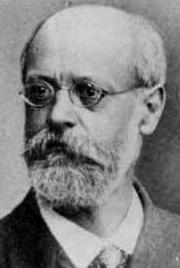
Photo: Karl Kautsky

Georgia and Russia have had a long and unpleasant history together, and by the late 19th century, a strong nationalist movement had emerged in Georgia seeking independence from the tsarist empire. But an even stronger working class movement emerged which had little interest in separatism. That movement's main political force was the Social Democratic Party which not only dominated Georgian politics, but whose leaders also played a key role in Russian politics as well.

A not insignificant number of those “Russian” leaders of the 1917 revolution which overthrew tsarist rule were in fact Georgians, who went on to play leading roles both in the provisional government and in the soviets.

Following the Bolshevik seizure of power, the Georgian Social Democrats (together with their nationalist allies in Armenia and Azerbaijan) broke the entire trans-Caucasian region off from Russia, bringing it under the protection of first the Germans and later the British.

The Mensheviks quickly established what they saw as a democratic socialist alternative to the Bolshevik model. They carried out land reform, nationalized key industries, reinvigorated education and culture, and did it all within a democratic framework, a multi-party system. Even the Bolsheviks were allowed to compete in elections – and this in spite of their occasional forays into putschism.

The Mensheviks in Georgia had no Cheka and no Gulag – two institutions set up by the Bolsheviks in the revolution's earliest days.

But all was not peaceful in the Menshevik republic, as Trotsky points out in his book, with one of the perennial problems being secessionist movements by national minorities within Georgia.

While Lenin and Trotsky were not particularly happy to have a Menshevik-controlled Georgia, occupied by foreign troops, on Russia's southern border, they eventually accepted the reality of Georgian independence. A peace treaty was signed between the Russian Soviet and Georgian republics. But Stalin, himself a Georgian, found the situation intolerable.

In Georgia itself, Stalin had often found himself as the only Bolshevik in the village. While this made his work in the country largely ineffective (he was repeatedly driven out of the party, partly due to allegations of his links to the Okhrana), it made him much more valuable to Lenin. He became Lenin's “expert” on national minorities, and was given this portfolio in the council of people's commissars.

The details of how the decision was taken in early 1921 to invade Georgia remain murky. The Soviet government and the Georgian Mensheviks had signed a peace treaty, ending years of turmoil. The Georgian Bolsheviks were operating legally again, their coup attempts forgiven. But following the withdrawal of British forces from Georgia and the fall of the other trans-Caucasian republics to Soviet rule in 1920, the Georgian republic grew increasingly vulnerable to an attack.

It is clear that Trotsky, then commanding the Red Army, did not order the attack. All indications point to a manipulative Stalin taking advantage of the situation, looking forward to entering his native land at the head of a conquering, albeit foreign, army.

Georgian resistance to the Red Army invasion was fierce, and continued long after Soviet rule was proclaimed in 1921. In 1924, for example, a bloody uprising organized by the underground Social Democrats nearly toppled Soviet rule in the country. Other bloodshed followed, and even as late as the 1970s and 1980s, Georgia remained one of the most volatile parts of the Soviet Union, with repeated episodes of terrorism and occasional mass protest.

With the collapse of the USSR in 1991, Georgia was among the first to declare independence. But the last fifteen years have been stormy ones, with a series of inadequate leaders coping poorly with a series of crises. Meanwhile, the Russians have continued to support secessionist movements along the country's northern border in a bid to destabilize Georgia and the region.

The news coming out of Georgia today cannot help but remind us of the long and bloody history of Russian-Georgian relations and especially of the invasion of 1921.

Back in the 1920s, condemnation of the Russian aggression against Georgia was widespread. The only defenders of that invasion were Communists, who followed the Soviet line that what had actually taken place in Georgia was a workers' revolution which had put out a call for help.

Communists took the view then that whatever the Soviets did had to be right, no matter how it looked. Looking back, one could argue that Trotsky's Between Red and White was not his finest work.

But today, with a reactionary, anti-democratic government in power in Moscow, certainly no one on the Left can feel any sympathy for a Russian move against Georgia.

The parallels between then and now, between 1921 and 2006, are everywhere. Putin is convinced that Georgia is being turned into a US military ally, a member of Nato, a potential staging area for attacks against Russia. Some of the Bolshevik leaders saw Menshevik Georgia in the same way, a base camp for Western imperialism.

Today, however, there is one critical difference: the democratic Left should have no excuse now for backing the Russians in their centuries-old drive to expand the empire.

Our position today should be as it was for most socialists in 1921 – the Communists being the exception: support for an independent, democratic Georgia, and opposition to Russian aggression.